
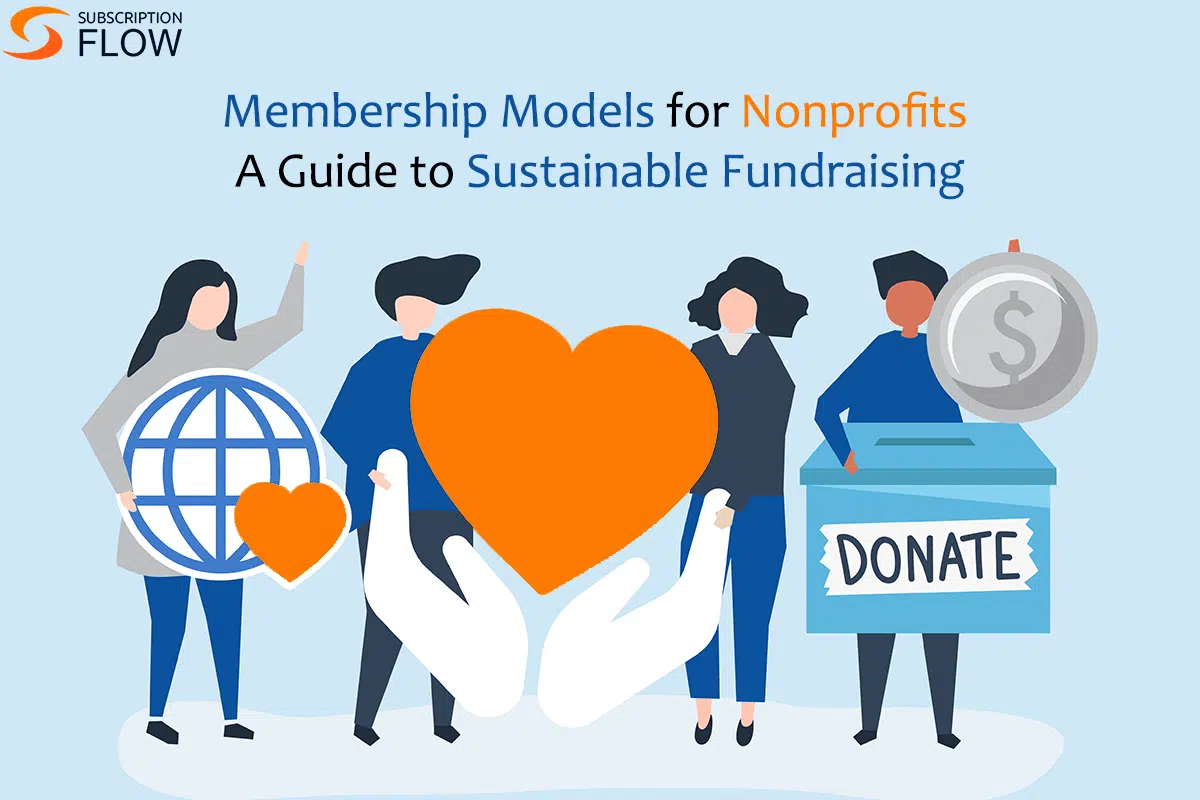
Membership Models for Nonprofits: A Guide to Sustainable Fundraising
What if your nonprofit has steady, predictable income instead of constantly chasing the next donation?
Funding is one of the major challenges for many nonprofit organisations. Grants are often limited to a single project, and one-time donations can fluctuate every month. Such irregular cash flow makes it difficult to predict revenue and grow sustainably. This uncertainty does not only impact the finances, but also constrains the capacity to grow programs and make a long-term impact.
That’s where nonprofit membership models come in.
An effective membership program enables nonprofits to raise regular income and create a loyal and engaged community of members. Rather than having one-time donors, businesses can develop loyal members who donate regularly and remain involved with core missions.
However, to manage members successfully, a dedicated subscription management platform is required. Let’s dive into how to establish and scale your membership program with ease using this platform.
What is a Nonprofit Membership Model?
The core of nonprofit businesses is to work towards social causes like education, religion, or charity instead of making a profit for the owners. All the revenue they generate is reinvested in their mission. Nonprofits are given the benefit of tax exemption and are commonly referred to as NPOs, charities, or non-commercial organisations.
A nonprofit membership model is an organised strategy in which supporters make donations, either financially or through their time, to get significant perks and a sense of belonging. This is unlike the traditional forms of fundraising, where an organisation can only be assured of a single donation. This model establishes a continuous relationship between the organisation and its donors.
The consistency that membership models bring is more powerful than a mere donation. By adopting a membership model, nonprofits can expect a steady flow of donations rather than hoping to attract new donors. Members feel like an active part of something bigger instead of just an occasional contributor.
Donor vs Member
Membership models convert your donors into active members. The distinction between a donor and a member is evident with time. A donor can make a one-time donation and be gone, whereas a member is invested in your mission.
They have higher chances of remaining engaged, taking part in activities, and promoting your cause. This intimate relationship turns support into commitment, which is vital for growth in the long term.

Common Membership Models Nonprofits Use
There’s no one-size-fits-all model. Various nonprofits have different models based on their mission, audience, and objectives. Some of the common membership models are:
Tiered Membership Model
One of the most popular structures of nonprofits is the tiered membership model. In this strategy, the companies develop several membership plans, including Basic, Plus, and Premium, that have varying prices and benefits. An entry-level can be newsletters and general updates, with tiers of higher levels providing exclusivity to events, recognition, or even being behind-the-scenes.
This hierarchy gives the supporters the option to determine the extent to which they can be involved. It also generates a natural way through which the members can upgrade as time goes by, as they perceive more value. Due to this, nonprofits are able to grow the level of engagement and revenue without necessarily finding new members.
Subscription-Based Membership Model
The subscription model concentrates on the recurrent payments deducted every month or every year in order to receive continuing value. This model is more focused on consistency and long-term involvement, unlike traditional donations. Online courses, workshops, or access to exclusive events and content are among the services provided by nonprofits via this model.
The main benefit of this model is that it brings predictability as the recurring payments enable the organisations to predict the revenue more precisely. This economic security assists nonprofits in strategising programs, growing operations, and investing in long-term projects with more confidence.
Volunteer or Advocate Membership Model
The volunteer or advocate-based model of membership is based on the concept of participation, as opposed to financial input. With this structure, people join the organisation by giving their time, skills, or influence to help the organisation achieve its mission.
This can be volunteering in events, campaigns, or advocacy to promote awareness. Although it might not bring in revenue directly, it creates a highly engaged and committed community. With time, a good number of volunteers also become more emotionally involved with the cause and ultimately become financial contributors as well.
Freemium Membership Model
The freemium model provides free access to the community of the nonprofit so that anyone can be a member without any financial obligation. Basic updates, community space access, or access to limited resources are usually provided to free members. After they get connected, they are prompted to purchase higher levels of membership that provide extra features and greater participation.
This is an effective method since it eliminates barriers to entry and is an effective way to increase the audience of nonprofits. With the value being created, a certain segment of the members automatically turns into paying supporters, forming a growth funnel that works in the long run.
Donation-Linked Membership Model
In the donation based model of membership, the membership status is directly related to the recurring donations. The levels of membership are automatically classified according to the levels of donations made by supporters, which include bronze, silver, and gold. This arrangement can make donors feel more appreciated and valued due to their continued help.
It also promotes regular giving because membership is usually conditional upon continued giving. In the case of nonprofits, the model provides a more predictable stream of revenue and enhances the relations donors have with the organisation by providing a structured recognition.
Common Membership Benefits Across Models
Though models of membership differ, the majority of nonprofits have similar benefits at their core to enhance engagement and retention. Members are commonly accorded privileged access to events, pre-registration, or certifications that enhance their attachment to the organisation.
Most nonprofits also offer niche benefits like advocacy toolkits, webinars, or networking opportunities, which assist members in taking meaningful action. In some cases, members are also allowed to be part of decision-making or strategy direction. Moreover, exclusive content like newsletters or reports is used as a reminder to members of the importance of continued support.
What Makes a Nonprofit Membership Program Work?
Introducing a membership model and making it successful are two different things. The primary difference between the two is how it is executed.
Clear Member Benefits
The value of each of the membership levels should be clearly stated. Members should be aware of what they are getting and why it is important. Benefits could include:
- Exclusive content
- Event access
- Recognition
- Networking opportunities
When the value is not obvious, people hesitate to join or stay for a longer time.
Smooth Onboarding Experience
First impressions matter. Prospective members can be discouraged if the registration process is not smooth. Ensure the onboarding process is:
- Simple
- Fast
- Intuitive
Provide new members with clear follow-up actions and instant benefits.
Consistent Communication
Engagement should not be limited to sign-up. Regular communication keeps members in touch. This includes:
- Newsletter
- Timely updates
- Invitations to events
- Personalised messages
This ensures that members feel included, not forgotten.
Easy Renewal Process
When it becomes complicated to renew membership, individuals lapse out. Automating renewals ensures:
- Continuous membership
- Less administrative work
- Higher retention rates
Self-Service Access
The contemporary members demand control. Allowing them a self-service portal enables them to:
- Update personal information
- Change membership levels
- Manage payments
This enhances satisfaction and minimises the support workload.
Major Challenges Nonprofits Face While Implementing Membership Models
Although membership models enable stability for nonprofits, they are not always easy to implement. Most organisations have operational, strategic, and technological issues that can restrict the success of their programs unless they are resolved early.
Some of the commonly faced challenges include:
- Defining a clear value for members
- Selecting the appropriate membership model
- Managing member expectations
- Technology and operational limitations
- Member retention and churn
- Gaps in communication and engagement
- Strategy of pricing and monetisation
In general, nonprofit membership models have great opportunities for sustainable growth, but their success is determined by careful planning, selection or appropriate tools, and regular engagement strategies.
How to Implement Membership Models Successfully?
Nonprofits quickly get overwhelmed with managing memberships manually. That’s where dedicated subscription management platforms like SubscriptionFlow come in.
SubscriptionFlow supports nonprofit membership management via:
Simplifying Membership Management
Administering a membership program manually can easily get overwhelming, particularly when your organisation expands. This is where SubscriptionFlow comes in handy. It makes the whole process simpler by automating to allow nonprofits to concentrate more on their mission and less on administration.
Flexible Membership Plan Creation
SubscriptionFlow enables nonprofits to develop their own membership plans, which are flexible and address their needs. Within one platform, organisations can easily manage various models at the same time.
Automated Billing and Renewals
The system eliminates the hassle of manual tracking payments through automated billing and renewal. It processes recurrent payments, reminders, and grace periods of unsuccessful transactions. This assists in maintaining a stable and predictable flow of revenue without necessarily monitoring it.
Self-Service Member Portal
SubscriptionFlow establishes a self-service portal that enables members to manage their accounts on their own. They are also able to change information, check payment history, and modify their membership plans without any hassle.
Advanced Analytics and Insights
Nonprofits have access to detailed analytics to monitor critical metrics such as retention rates, churn, and revenue by plan. The insights enable organisations to comprehend the behaviour of members and make informed choices to enhance performance.
Seamless Payment Integrations
SubscriptionFlow is compatible with reliable payment systems such as Stripe, PayPal, Authorize.net, WorldPay, and Ayden, etc. It also enables nonprofits to utilise multiple payment gateways simultaneously and support several payment methods such as credit card, ACH, and digital wallets like Apple Pay and Google Pay.
Turn Your Supporters into Long-Term Members
To be successful, nonprofits need more than passion. With financial stability and good relationships with their donors, they can make a major impact. Membership models are an effective means to accomplish recurring revenue and establishlong-term interactions.
With the support of SubscriptionFlow, nonprofits can easily manage memberships and make them far more impactful.
Ready to create a sustainable membership program for your nonprofit? Book a free demo with SubscriptionFlow and discover how you can streamline operations, increase engagement, and build a stronger source of funding.

POPULAR POSTS
Think Business!
Related Posts
 All You Need to Know About Membership Billing Software
- Boost Customer Loyalty with Reward Point Management Software
- Membership Management Software for Nonprofits: Why Is It a Necessity?
- Flexible Membership Tiers: Why They Matter for Scaling Revenue
- Upgrade or Downgrade Memberships & Subscriptions—Meet Customers Where They Are