
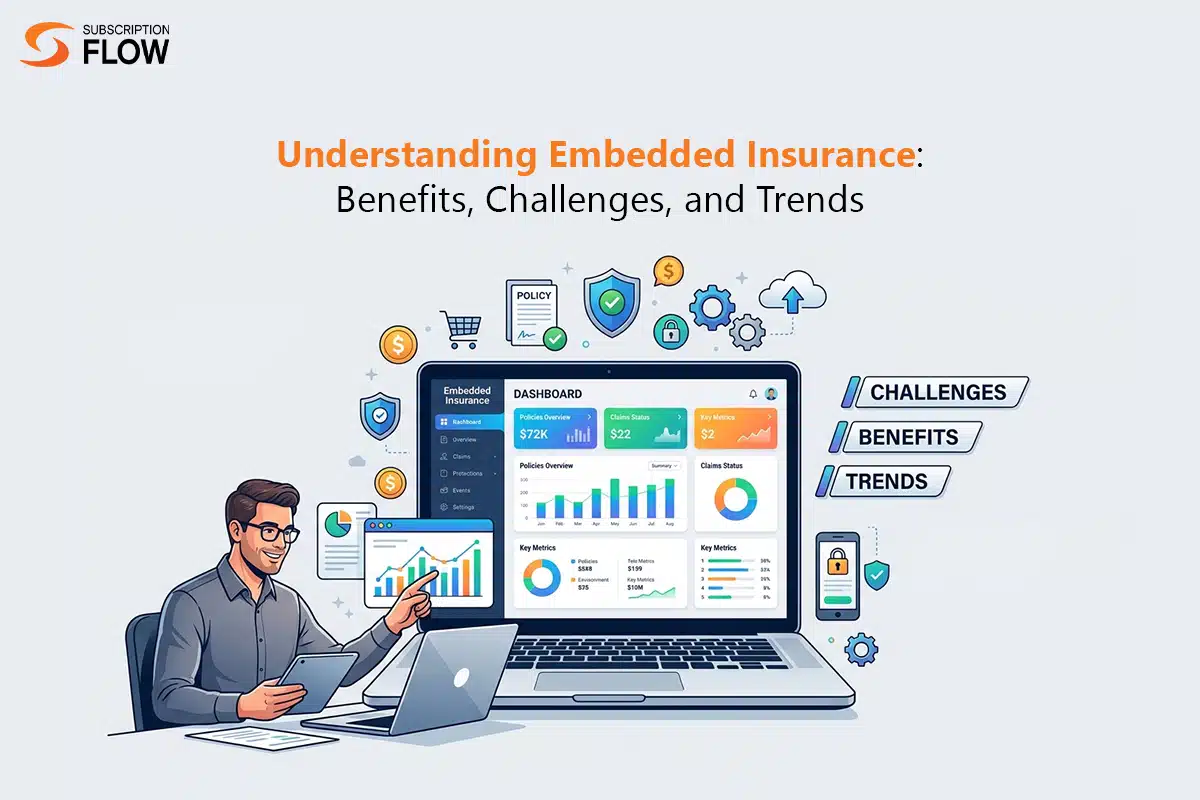
Understanding Embedded Insurance: Benefits, Challenges, and Trends
The era of insurance as a standalone product is gone. In this digital world, insurance is now becoming an invisible, native extension of the modern user experience. Your customers no longer want to piece together fragmented services; they expect comprehensive, end-to-end experiences. When a customer opens a new tab to buy insurance from a third-party legacy carrier, you lose more than just a transaction; you lose a critical touchpoint and a significant portion of their lifetime value.
This drives the rapid rise of embedded insurance, where embedding protection directly into the existing purchase flow allows companies to capture a massive secondary revenue stream while dramatically increasing customer loyalty.
However, upgrading from a standard transaction model to an embedded insurance framework requires more than just a partnership with an underwriter. It demands a technical infrastructure capable of handling complex billing logic, real-time data syncs, and compliance.
What is Embedded Insurance?
In simple words, embedded insurance means integrating insurance products directly into non-insurance platforms, services, or customer journeys. Usually, this integration is done at the point of need or sale. Instead of requiring customers to seek out coverage from a third party, businesses can offer insurance contextually as a seamless add-on during a transaction.
Use Cases
- B2B SaaS and tech platforms (cyber liability for cloud infrastructure, business interruption for e-commerce enablers)
- E-commerce and retail (point-of-sale product protection, native shipping, and cargo insurance)
- Mobility, automotive, and ride-sharing (all-inclusive vehicle subscriptions, on-demand gig economy coverage)
- Travel and hospitality (automated parametric flight delay protection, micro-coverage for event ticketing)
- Fintech and banking (purchase protection, travel medical, and device coverage)
Difference Between Embedded and Non-Embedded Insurance
The core difference between embedded and non-embedded (traditional) insurance lies in the purchase environment. The embedded insurance is integrated into the usual transaction of a purchase, whereas in non-embedded insurance, customers need to step out of their way to research and look for suitable options separately. Non-embedded insurance is usually gained after the asset is acquired while embedded insurance can be acquired simultaneously with product purchase.
Key Benefits of Embedded Insurance
Frictionless Customer Experience
The major difference embedded insurance makes is in customer experience. Contrary to traditional insurance, which requires customers to look out, compare, and select policies on their own, embedded insurance offers policies through a single click or even a pre-ticked checkbox at the right moment in a customer journey. The convenience at the time of checkout increases conversions and improves the overall customer experience.
Higher Insurance Penetration and Inclusivity
Customers hesitate to get insurance policies not because they don’t want to, but due to the technical complications involved. With easy integration, embedded insurance lowers the barrier to entry. This helps customers to acquire insurance policies easily without any hassle. Whether they are using banking apps, travel platforms, ecommerce stores, or subscription services, customers get the policies exactly where they need with embedded insurance.
Better Data and Risk Personalisation
Embedded insurance models are supported by real-time data. This offers substantial benefits to both companies and end-customers. Via accessing real-time behavioural data, including purchase history, usage patterns, location, device type, and more, insurers can offer policies that are competitively priced. Customers, on the other hand, receive personalised coverage that meets their demand.
New Revenue Streams for Non-Insurance Businesses
Embedded insurance is an emerging monetization opportunity for digital businesses. When companies serve as a distribution channel for insurance products, they earn commission or revenue-sharing fees without needing to become an insurer themselves. This opens a distinctive revenue stream for highly competitive businesses.

Lower Customer Acquisition Costs for Insurers
Since embedded insurance offers policies to the existing customers, it saves on the cost to acquire new customers. Typically, insurers spend a significant portion of their revenue to acquire new customers, including marketing costs, agent networks, and brand-building investment. Embedded insurance sidesteps much of this by targeting existing audiences. When a customer already has trust in the brand, there are high chances of acquiring an insurance policy that the same brand offers.
Challenges in Implementing Embedded Insurance
It is not as easy as it seems to implement embedded insurance. Businesses face significant changes, such as:
Regulatory Complexity
Insurance is one of the most highly regulated industries out there. When integrated into third parties, it does not make the industry less regulated; it spreads it across multiple entities. Licensing, disclosure obligations, claims handling responsibilities, and data privacy compliance issues may differ from one jurisdiction to another. This patchwork approach complicates the operations for global platforms that serve different markets. Navigating this landscape demands specialised legal skills and partnership among technology providers, distribution channels, and insurance companies.
Customer Trust and Transparency
Convenience can sometimes come at the cost of transparency. If insurance is included at the checkout or offered as a subscription bundle, the customer may not completely understand the policy terms, coverage, and how to file a claim. This ambiguity can result in conflicts, substandard claims fulfilment, and harm to the platform’s reputation and the insurer. Trust in embedded insurance needs to be built with a conscious strategy: using clear language, easily accessible policy summaries, opt-out options, and responsive claims processes.
Technology and Integration Challenges
Seamless integration for insurance on a digital platform involves a strong APO infrastructure, reliable data streams, and close integration of technology stacks that often are developed separately. This integration can be expensive and time-consuming on platforms that don’t have modern, flexible architecture. Moreover, significant backend sophistication from the insurer’s side is needed for the success of a good embedded insurance experience.
Revenue Sharing and Partnership
Creating a fair and sustainable commercial arrangement between the insurer and the distribution partner can’t be done easily. Prior to establishing a partnership, issues of revenue sharing, who is liable, what claims are made, and who owns the data need to be clearly understood. Misaligned incentives can cause poor product design, under investing in the customer experience, or cause disputes in the future.
Key Trends Shaping the Future of Embedded Insurance
The landscape has significantly shifted in recent years. If your business is looking to implement an embedded strategy, these trends are non-negotiable:
Parametric Insurance At The Point of Need
Parametric insurance, which pays out based on predefined triggers instead of actual loss assessment, is emerging as a natural fit for embedded models. Parametric policies are fast, transparent, and easy to integrate as they are automated and do not require claims adjuster. More parametric products are expected to embed into travel, agriculture, and logistics platforms in future.
AI-Driven Personalisation
AI is revolutionizing the embedded insurance proposition. Information on behavior can be analyzed in real time to provide hyper-personalized coverage at the right time. Insurers and platforms equipping themselves with AI are shifting from static products to dynamic, context-aware experiences, without being intrusive.
Embedded Insurance in B2B and SaaS
While much of the current attention on embedded insurance focuses on consumer markets, the B2B space is increasingly adopting the model. SaaS solutions for small and midsize businesses are starting to integrate cyber insurance, professional liability, and equipment coverage into their solutions, providing value for the business customers and increasing revenue potential for the SaaS business.
Open Insurance and API Ecosystems
Open insurance is the insurance version of the open banking movement. It helps insurers integrate into digital ecosystems more smoothly by standardising APIs and data-sharing protocols. This helps to reduce the technical hurdles in embedding coverage and helps catalyse product innovation across the sector.
How SubscriptionFlow Supports the Embedded Insurance Model
To overcome these challenges, there’s a need for advanced billing logic, automated renewal management, and integration with partner platforms.
SubscriptionFlow is designed just for this kind of complexity. SubscriptionFlow is a comprehensive subscription management and recurring billing service that lets you effortlessly manage usage-based billing, tiered pricing, insurance add-ons, and partner revenue sharing. Its API infrastructure provides a flexible platform to integrate insurance providers, distribution channels, and payment gateways, making it the perfect operational foundation for companies offering embedded insurance through their products.
SubscriptionFlow offers you billing intelligence, automation, and analytics to support your growth, whether you are embedding products through digital channels or you’re a platform that is looking at insurance as a new revenue stream or a subscription business looking to add protection products to your catalog.
Scale Your Embedded Insurance with SubscriptionFlow
Establishing a successful embedded insurance setup requires more than just a great partnership; it requires the right infrastructure. SubscriptionFlow bridges the gap between your platform and your insurance partners by offering the necessary automated billing and subscription management tools. The future of insurance is invisible. Let SubscriptionFlow provide the power that makes it possible.

POPULAR POSTS