

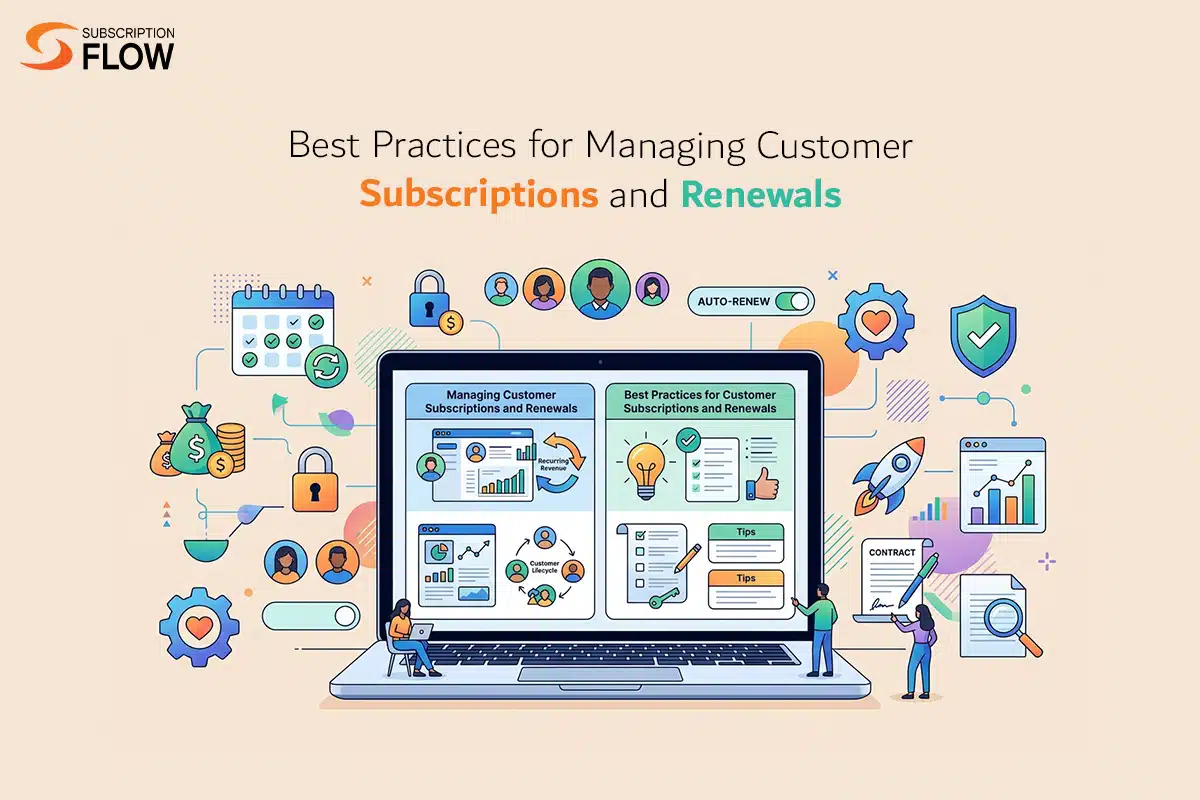

How to Structure Multiple Magazines and Subscription Offers at Scale
One magazine subscription? Easy to manage. Multiple magazines: five, ten, fifty? Challenging without expert software. The more magazines you offer, the more your administrative burden multiplies. Merchants don’t struggle with content provision as much as with their subscription architecture.
Multiple magazine subscriptions need an efficient management structure. Otherwise, operations slip out of hand quickly. It becomes easier to miss invoices, forget offer deadlines, produce errors in billing and create reporting gaps.
The only way out of this chaos is a magazine subscription management platform. It doesn’t only help with managing multiple magazine subscriptions, offers and bundles, but also lets companies scale without limits.
Challenges of Handling Multiple Magazine Titles
When you add more than one magazine to your subscription product portfolio, complexity grows in these dimensions:
More titles: Customers can choose from various titles with possibly differing prices. Merchants have to ensure that orders are dispatched accurately, and are also billed without errors.
More billing cycles: 10 customers on one monthly magazine subscription means 10 billing cycles per month. But if you have, say, 3 magazines with 10 customers each, then it becomes 30 billing cycles per month. There is more payment volume to be processed and invoices to be generated.
More billing durations: Plans become even more complicated when there are different billing durations involved. If you have 3 plans with 3 durations each (weekly, monthly, annually), that makes 9 billing frequencies you need to track.
More offers: Merchants often give out special offers on plans like promotions or bundles. These also complicate product catalog, pricing and recurring charges.
Sellers struggle with offering introductory discounts, seasonal promotions and regional pricing for customers living in different countries. This results in the following:
- Duplicated products
Just to offer discounts, merchants have to duplicate products in their catalog, creating more items to be managed. That’s because there’s no billing logic operating in the background and discounts have to be shown separately, and applied manually.

- Inconsistent pricing models
There are fluctuating prices, not a standard model on which all products are priced. Since pricing doesn’t follow a structure, it creates confusion around the actual product value, and makes regional pricing more arbitrary than systematic.
- Flawed reporting logic
There is no way to achieve complete visibility into the metrics of different plans because there’s simply too much to track. It becomes easier to miss insights when reporting depends on manual tracking entirely.
- Poor lifecycle management
Customer lifecycles are slow, payments are not instant, and there are renewal delays. Plan changes take more time than they should, and promotional offers are difficult to execute. This leads to billing cycles that are full of friction.
Why You Need Proper Subscription Architecture for Scaling
The key to multiple magazine subscription success is not mixing product logic with promotional logic. Publishers offering multiple magazine titles can achieve this with a strong subscription management architecture. With such a platform, they can:
Separate products, billing and promotions
No duplicate products need to be created just for the sake of promotions. With a strong billing backbone, automatic discounts can be applied without changing product catalog. The same goes for billing. One plan can have more than one billing durations, and still remain visible as one product in the portfolio. The billing duration and checkout logic is handled by your billing software.
Expand into new titles more easily
Merchants can add as many magazine titles as they like, as there’s no manual management involved. This means that additional titles don’t bring in additional admin load, they simply become extra revenue streams.
Launch campaigns faster
Marketing campaigns, discounts and promotions can be launched faster as billing becomes automatic. There’s zero manual billing burden, risk of errors or missed payments.
Access reports by title, plan and region
Magazine subscription management software is capable of generating reports by magazine title, plan and region. Merchants can view which titles and plans sell the most, their business performance in each region, and how customers from different countries react to their pricing structure.
Enjoy minimal operational overhead
Since management processes become heavily automated, they require lesser physical resources. This proves cheaper and more efficient for the sellers.
Structuring Magazines in SubscriptionFlow
In SubscriptionFlow, merchants can structure their magazines easily. Magazine subscriptions follow this structure:
- Products (titles)
- Plans (billing)
- Offers (promotions and bundles)
With SubscriptionFlow as your magazine management platform you can:
- Create each magazine as a product
Each magazine title can be created as a separate product for cleaner subscriptions. This way, you can track revenue generated from each title easily. This also helps in easy bundle creation and scaling, as each product has its own price and inventory tracking number.
- Keep products promotion-independent
Companies can keep their catalogs clean by offering promotions smoothly. They don’t have to create duplicate products to show customers discounted items separately.
- Create different billing durations for each plan
Monthly, weekly or quarterly, set up any one or all of these billing frequencies at the same time for your plans. There’s no limit on durations; SubscriptionFlow follows your rules.
- Offer auto-renewal or fixed term subscription
You can have auto-renewing subscriptions, such as monthly magazine renewal for $15. You can also sell fixed-term subscriptions, such as a 12-month duration plan for $60 upfront.
- Standardize plans across titles
Plans can also be standardized across all titles for more clarity for your customers, and easier performance tracking for you. For example, you can make all of your products monthly auto-renewing.
- Set up a variety of offers
You can set up a number of offers at the same time. Think about coupons, free-shipping codes, introductory pricing (like 10% off first payment), seasonal promotions, geo-based pricing variations and customized magazine bundles. All these offers can be layered smoothly on top of your products so that your core billing operations remain undisturbed.
Managing Multiple Titles in One Instance
SubscriptionFlow allows merchants to manage multiple magazine titles from a single system instance. Meaning, sellers can create dozens (even hundreds) of products within the same instance.
One, unified catalog
There is no need to maintain separate catalogs. One catalog can contain as many products as you like. This gives you a clean oversight, and helps you create bundles with more clarity.
Role-based access
To keep the subscription structure organized, each of your teams can have different levels of access to management operations. This reduces chances of errors at scale, and prevents task spillover. So, for example, your finance team can have access to the billing operations while your marketing team can have access to the campaigns.
Centralized reporting
With all products in one catalog, reporting becomes simpler and unified. You can easily monitor revenue generated by each title or plan. You can also review the performance of each campaign separately, and view reporting breakdowns by region.
Best Practices for Scaling
Multiple magazine subscriptions are easy to scale with SubscriptionFlow. They become even easier to scale if merchants keep these best practices in mind:
- Naming products, plans and offers clearly
In your product catalog, name each subscription item clearly. For example, magazine name, plan name and offer title. This keeps your internal operations clear, simplifies reporting and avoids confusion between different plans.
- Avoiding plan duplications
Layer offers onto products. Don’t create different products to show standard and discounted items separately. Keeping these layers separate is important to keep your catalog clean and billing organized.
- Expiring campaigns on time
When a campaign (like a promotion) expires, disable it immediately, or enable auto-expiration. Since the offer acts like a separate layer, merchants don’t need to remove the entire product to disable the offer. They can keep their product and plan untouched, and their historical data safe.
- Keeping reporting structured
Before you launch a new campaign, think about how your offer will be structured, and how it will be tracked and included in reports. Decide whether it needs a new reporting segment or does it fit into the existing segments well.
Start structuring your magazine subscriptions with SubscriptionFlow today. Smoothly layer offers on top of your products for clean scaling.

POPULAR POSTS





Think Business!
Related Posts
 Integrating Metered Paywalls with Subscription Management Systems—Monetizing Content the Right Way
- Magazine Subscription Billing Software: Addressing Challenges and Refining Operations
- Easy Magazine Subscription Renewals, Faster Payments & Happy Readers
- Bill Me Later Magazine Subscriptions Made Possible with SubscriptionFlow
- Billing Software for Magazine Publishers to Streamline Subscriptions